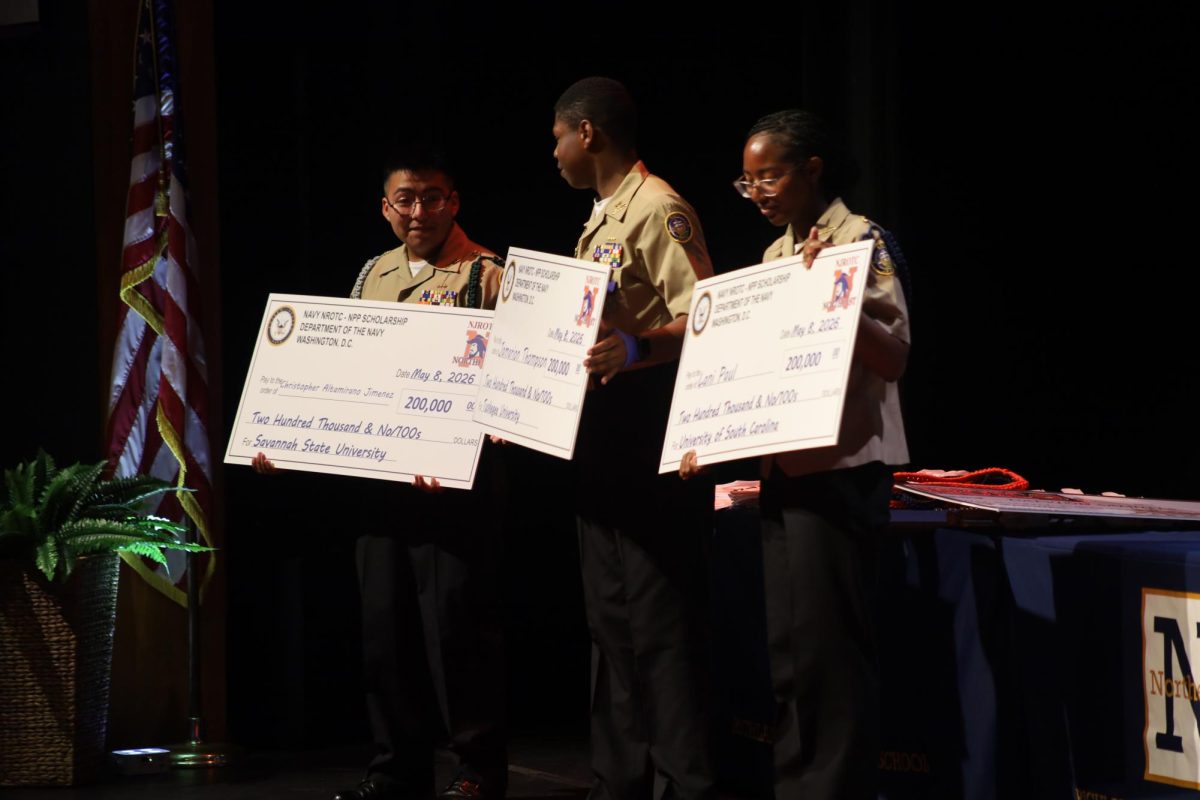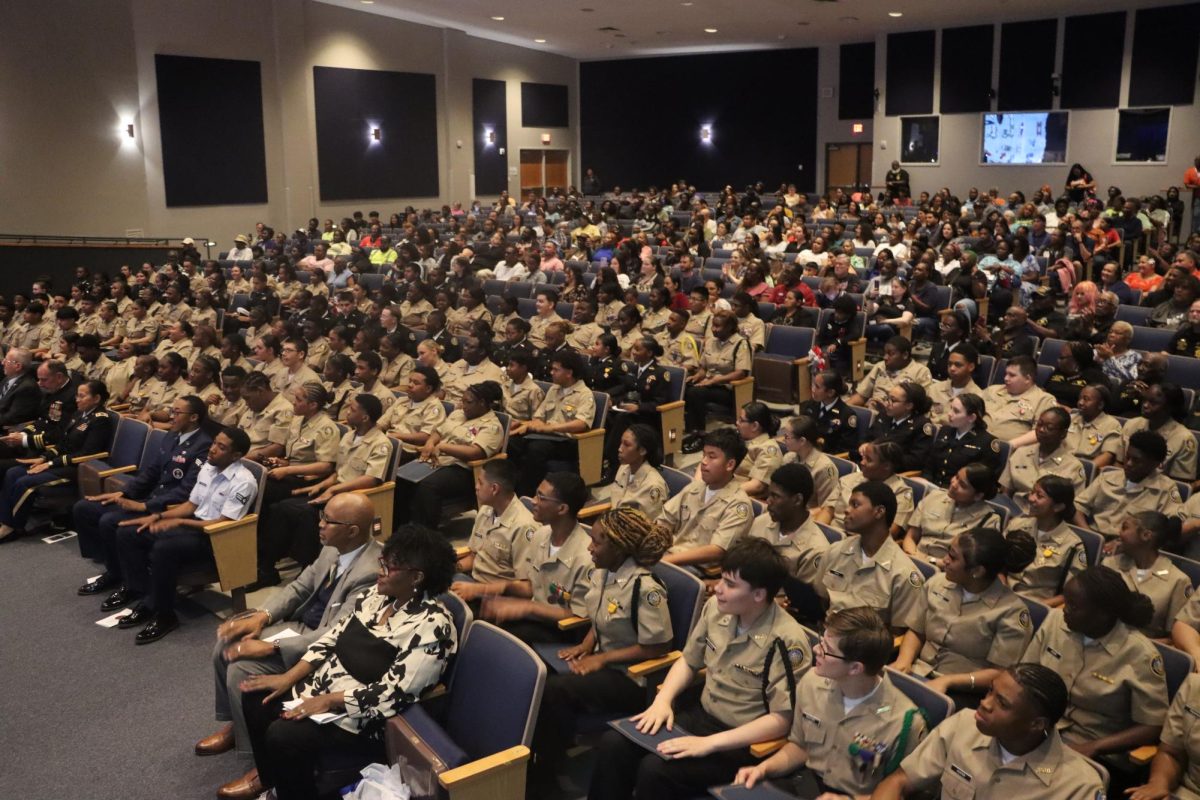
As senior NJROTC cadets graduate, they pass down a legacy of leadership, discipline, and mentorship within the unit and leave their mark and presence for the next generation of cadets and upcoming staff.
“The leadership I was surrounded by during my freshman and sophomore years inspired me to become an NJROTC officer,” Naomi Hardnett, senior Cadet Lieutenant Commander (O-4), said. “Those leaders were encouraging, dedicated, and always willing to mentor younger cadets. Because of the impact they had on me, I wanted to make sure incoming cadets had the same positive role model and support system that I had as an NS1.”
With new staff members stepping into leadership roles, they take on the responsibility of continuing that tradition and guiding younger cadets through the program.
Freshman year is both the beginning of high school and the first year for many cadets in NJROTC, which can be overwhelming. NJROTC is a structured and demanding program that teaches leadership, discipline, and responsibility, so balancing those expectations while adjusting to high school can be challenging. However, upperclassmen and staff play an important role in helping new cadets adapt and succeed.
“The biggest challenge as a first-year cadet would be AMI and the inspections because you have to study nonstop to remember everything for the upcoming day,” Reece Payne, freshman Petty Officer 3rd Class, said.
Leaving NS1 and moving into NS2, cadets use the hard work, discipline, and dedication taught by Master Guns to continue growing as leaders and setting an example for incoming cadets.
Freshman Emna Jimenez Hernandez, a Petty Officer 3rd Class, has advice for first-year cadets. “I would tell them not to be nervous and to give it a chance because it helps you grow as a person and make new friends,” Jimenez Hernandez said.